
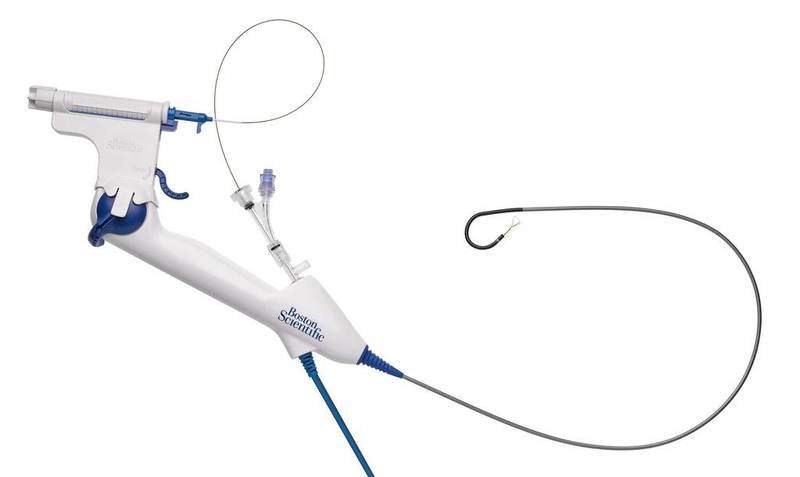
Boston Scientific has launched the LithoVue Empower Retrieval Deployment Device in the US and Europe for retrieval of kidney stones through flexible ureteroscopy (URS).
LithoVue Empower is indicated for use with the LithoVue Single-Use Digital Flexible Ureteroscope and compatible nitinol retrieval basket. The device is intended to enable the simultaneous operation of a ureteroscope and basket.
Go deeper with GlobalData


Discover B2B Marketing That Performs
Combine business intelligence and editorial excellence to reach engaged professionals across 36 leading media platforms.
Commonly, kidney stone retrieval by an urologist requires another person to operate the basket.
A single-person procedure with the LithoVue Empower device is said to offer better control to the surgeon. It also reduces the miscommunication risk during basketing of the kidney stones.
Boston Scientific MedSurg executive vice-president and president David Pierce said: “The LithoVue Empower Device was developed in direct response to a need to improve procedural bottlenecks during kidney stone removal procedures.
We are committed to identifying and addressing unmet needs to enable healthcare providers to advance patient outcomes, reduce procedural costs, enhance quality of care and evolve the treatment of urologic and pelvic conditions.”

US Tariffs are shifting - will you react or anticipate?
Don’t let policy changes catch you off guard. Stay proactive with real-time data and expert analysis.
By GlobalDataData reported by Johns Hopkins Medical Institutions fellow Kevin Koo revealed that the new device allowed flexible ureteroscopy, involving stone manipulation and retrieval, by a single person.
The procedure had less muscular workload compared to a single-surgeon ureteroscopy, and similar workload to two-surgeon ureteroscopy. LithoVue Empower was also found to improve task completion time.
Johns Hopkins Medical Institutions urology professor Brian Matlaga said: “The LithoVue Empower Device is a unique tool that can improve ureteroscopic stone treatment as it puts the process of stone manipulation entirely into the hands of the surgeon.”



