
Abbott’s blood test can detect the presence of a mild traumatic brain injury (TBI) even when computed tomography (CT) scan fails to find it, a study has confirmed.
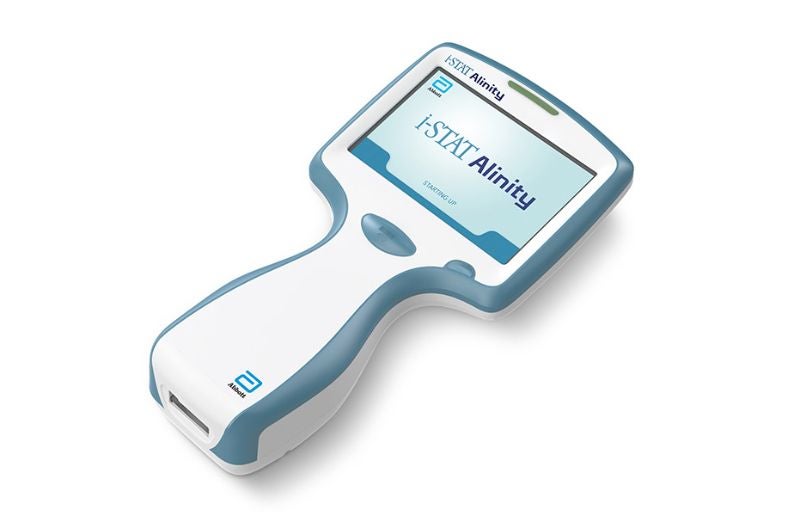
The test is designed to identify increased levels of a protein called brain-specific glial fibrillary acidic protein (GFAP) in the blood. Abbott’s i-STAT Alinity blood analyser device was used to carry out the test.
Go deeper with GlobalData


Discover B2B Marketing That Performs
Combine business intelligence and editorial excellence to reach engaged professionals across 36 leading media platforms.
A CT scan is the existing standard of care for acute detection of blood or swelling in the brain.
The study, named TRACK-TBI, showed that approximately 30% of patients who had a normal CT scan exhibited TBI signs when tested with an MRI scan. However, MRIs are not accessible at all hospitals, are comparatively slow at delivering results and are more costly, noted Abbott.
The study analysed 450 patients who were admitted to the emergency department at 18 trauma centres within 24 hours of a suspected TBI and had a negative CT scan.
Investigators used Abbott’s test to detect GFAP levels in the participants’ blood samples and later performed MRI scans up to two weeks to confirm the TBI.
US Tariffs are shifting - will you react or anticipate?
Don’t let policy changes catch you off guard. Stay proactive with real-time data and expert analysis.
By GlobalDataOut of the 90 participants who had the highest GFAP levels, 64% were found to have a TBI with the MRI scan. Also, of the 90 people with the lowest GFAP levels, 8% were found to have a TBI.
Abbott added that GFAP levels were significantly elevated in people with a positive MRI and a negative CT scan than those with both negative scans.
The biomarker is also expected to enable prediction of the type of damage and its extent.
Meanwhile, GFAP levels were not significantly high in healthy participants or those with only orthopaedic injuries.
From the findings, the company have said that GFAP can be used as a biomarker to identify those who need further tests to confirm TBI.
Abbott Diagnostics neurologist and medical director Beth McQuiston said: “Healthcare providers rely on blood tests for a variety of conditions because of their accuracy and speed, yet we haven’t had a blood test for the brain as part of the standard of care.
“Abbott’s i-STAT device has become a trusted brand in hospitals globally today. In the future, our TBI test and next-generation device could also be added to the standard of care, working together with CT scans and other diagnostic tools to provide doctors with a more complete understanding of a patient’s condition.”
The TRACK-TBI study also assessed the link between brain injury and S100 calcium-binding protein B (S100B), ubiquitin C-terminal hydrolase L1 (UCH-L1) and neuron-specific enolase (NSE) protein.
Higher GFAP levels were observed to be more sensitive for identifying brain injury in case of a negative CT scan compared to higher levels of UCH-L1, S100B or NSE.



