
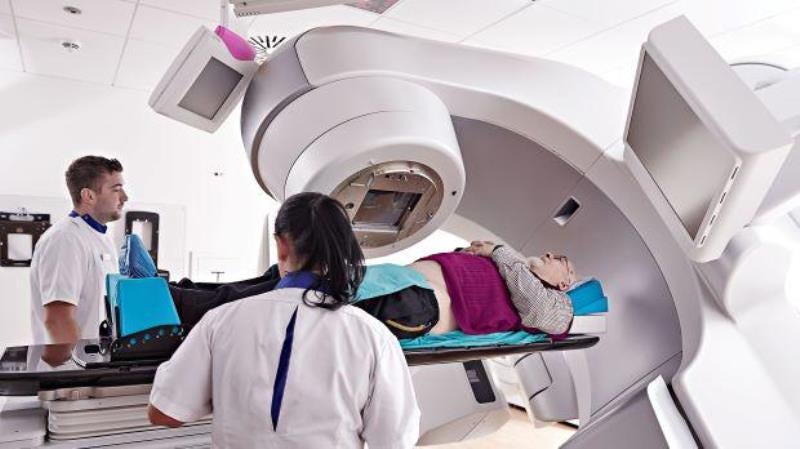
Cancer Research UK has announced a £56m research network to transform the UK into a global hub for radiotherapy study.
By leveraging the use of the latest techniques, such as FLASH radiotherapy and artificial intelligence (AI), the network aims to accelerate the development of advanced radiotherapy.
Go deeper with GlobalData


Discover B2B Marketing That Performs
Combine business intelligence and editorial excellence to reach engaged professionals across 36 leading media platforms.
The network, Cancer Research UK RadNet, will bring together the Universities of Cambridge, Glasgow, Leeds, Manchester and Oxford, as well as the Cancer Research UK City of London Centre, The Institute of Cancer Research and London in partnership with The Royal Marsden NHS Foundation Trust.
Cancer Research UK chief executive Michelle Mitchell said: “Radiotherapy is a cornerstone of cancer medicine, with around 3 in 10 patients receiving it as part of their primary treatment. The launch of our network marks a new era of radiotherapy research in the UK.
“Scientists will combine advances in our understanding of cancer biology with cutting-edge technology to make this treatment more precise and effective than ever before”.
The network aims to explore flash radiotherapy, which delivers pulses of radiation in high doses within a fraction of a second so that healthy tissues surrounding the tumour get less damaged compared to conventional radiotherapy.

US Tariffs are shifting - will you react or anticipate?
Don’t let policy changes catch you off guard. Stay proactive with real-time data and expert analysis.
By GlobalDataThe network will also investigate the use of proton beam therapy technique to improve cancer patients’ survival rate. The proton beam therapy emits out beams of protons, rather than photons, to kill cancer cells.
Cancer Research UK RadNet will explore different approaches to overcome hypoxia, a condition of low oxygen within tumours. Such tumours react far less to radiotherapy. Researchers aim to find methods to identify hypoxic tumours, investigating treatments to oxygenate them.
It will also study the role of cancer stem cells and why some cancers reappear despite radiotherapy.
The network aims to develop drugs for use in combination with radiotherapy.
Furthermore, the network aims to leverage AI to provide personalised treatment guided by data drawn from patients’ scans.
Cancer Research UK trustee Adrian Crellin said: “I’ve seen first-hand how successful radiotherapy can be for patients that I treat but it’s been frustrating to see the UK lagging behind other countries when it comes to prioritising research into this vital treatment.
“Cancer Research UK’s investment will overhaul radiotherapy research in the UK to bring the next generation of treatments to patients sooner.”



